Understanding targeted cryotherapy
Cold therapy—focused exactly where it’s needed.
A dry, non-invasive recovery option for an animal or person, applied one targeted area at a time.
What it is
Rapid, localized cooling with pressurized carbon dioxide.
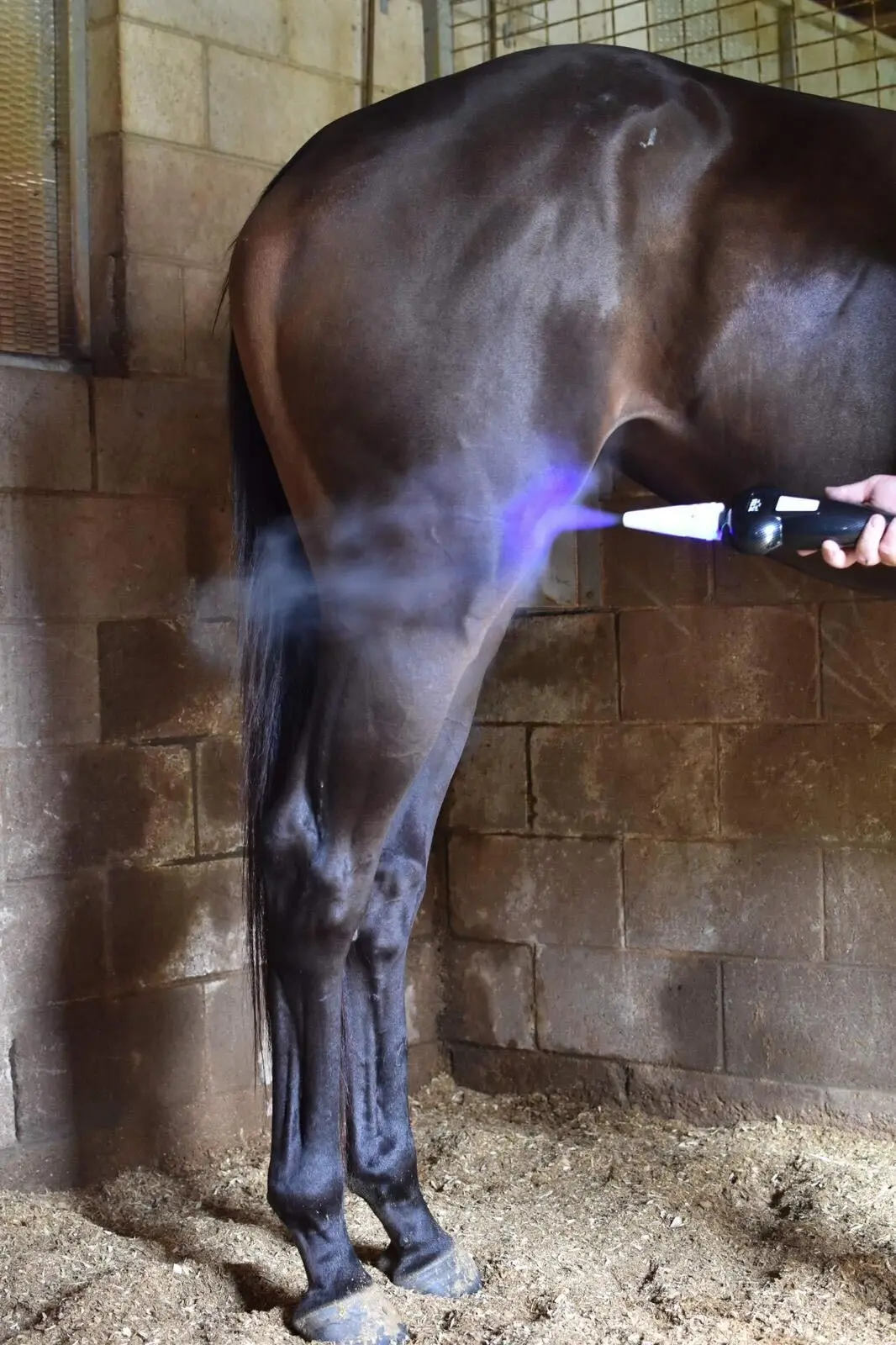
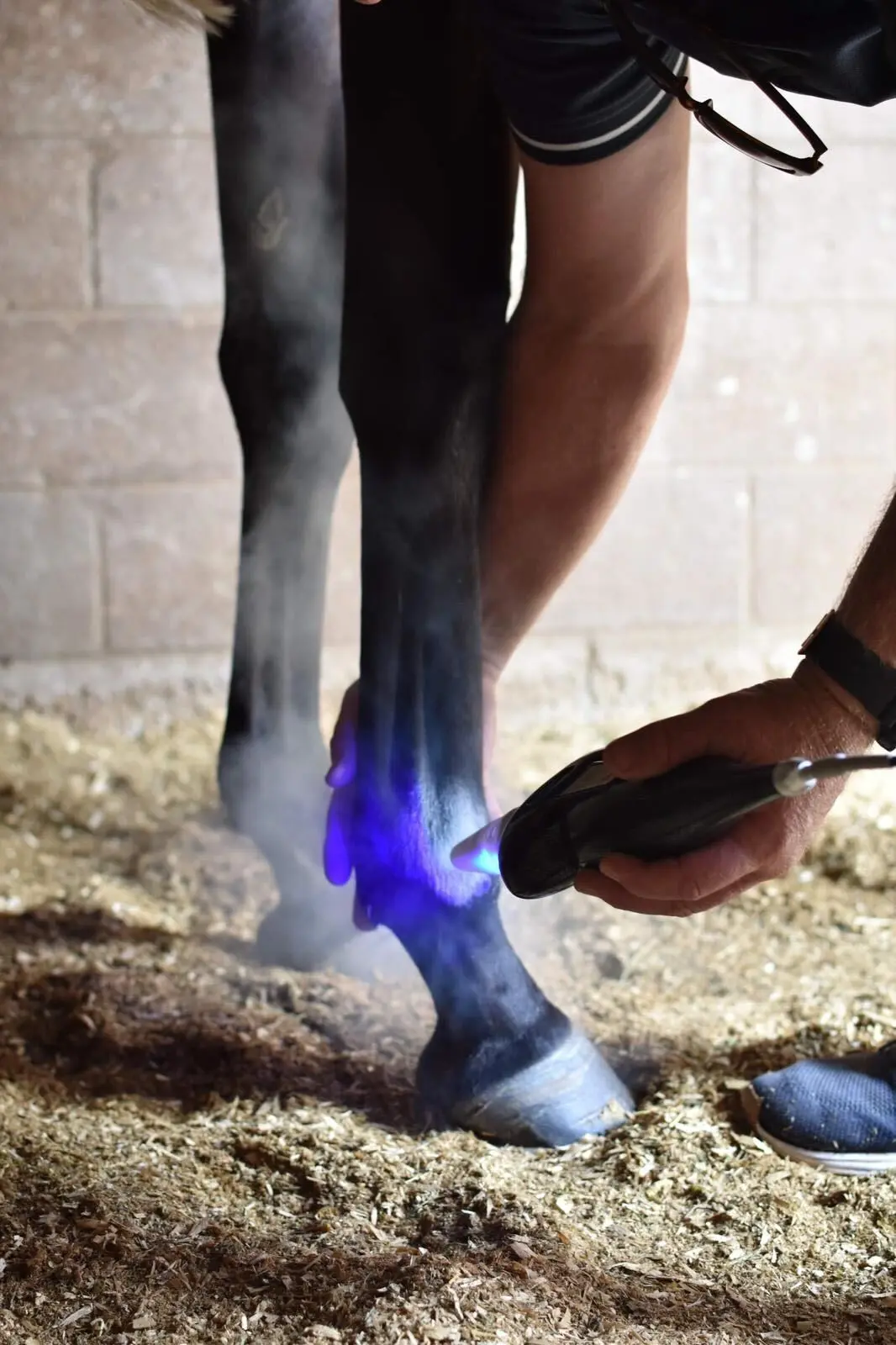
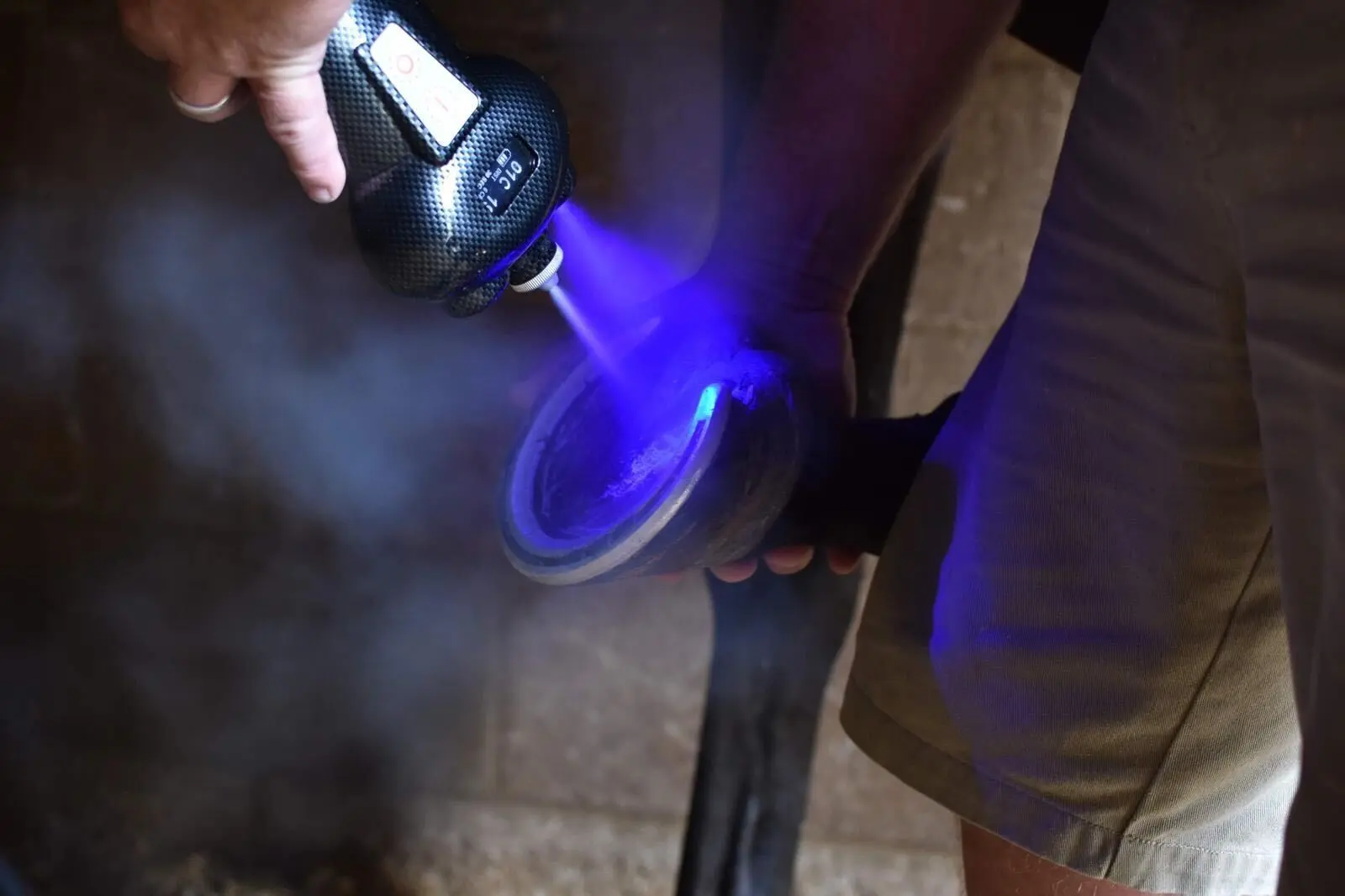
A handheld device directs pressurized carbon dioxide gas at approximately −108°F (−78°C) over a specific area, creating a rapid surface-cooling effect within seconds. The application is dry, zero-contact, and focused on the area that needs support.
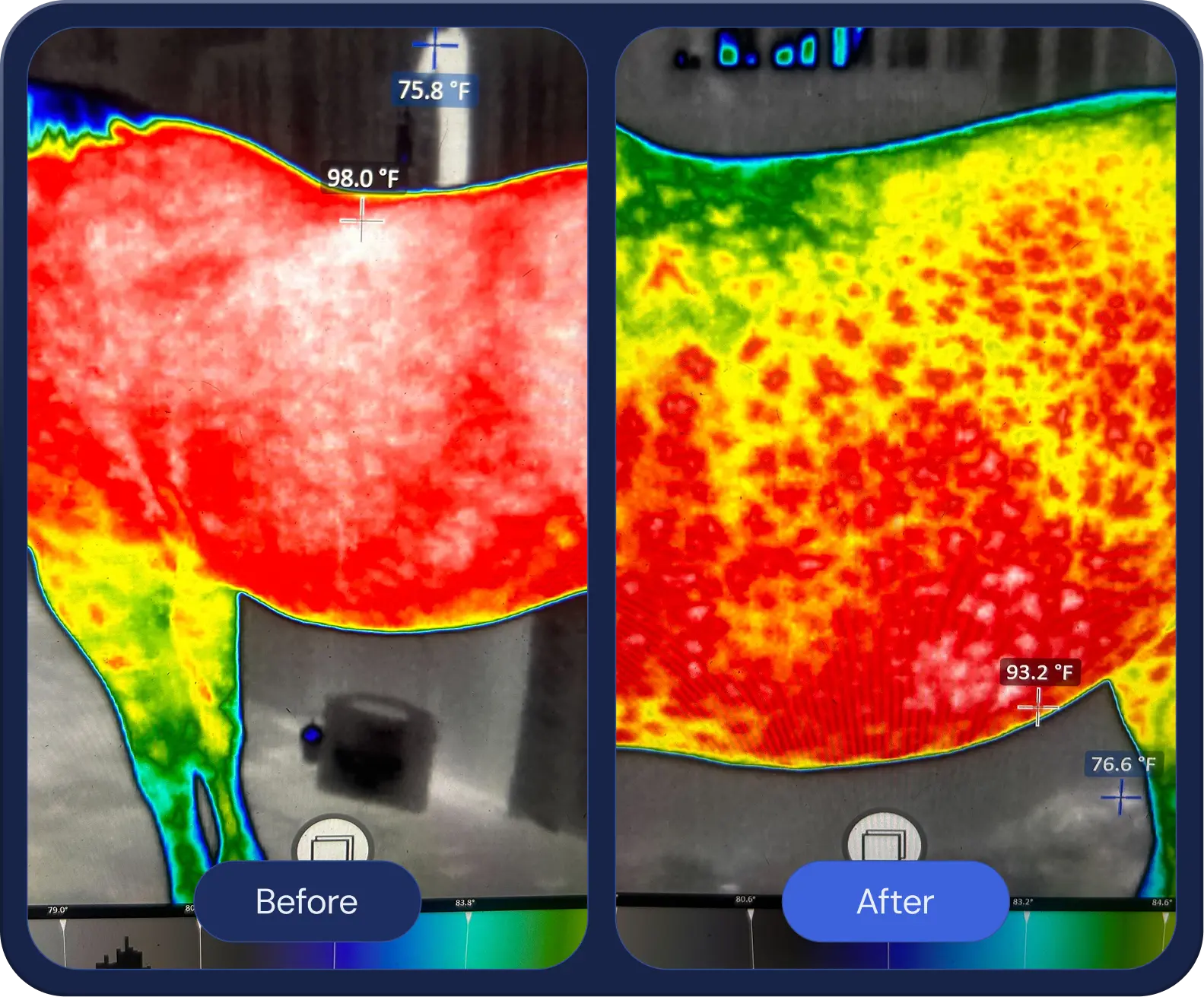
Localized sessions generally take about 1–3 minutes per area. Real-time temperature monitoring helps keep the application precise and consistent without ice boots, cold packs, or cold hosing.
Traditional ice packs cool gradually and can create uneven surface cooling. Pressurized carbon dioxide creates an immediate, precisely targeted cooling response exactly where it is needed. Although the carbon dioxide is applied at the skin, the rapid temperature change activates sensory and vascular responses beneath the surface rather than relying on cold to slowly move through the epidermis and dermis.
This rapid cooling first causes temporary vasoconstriction. As the area naturally warms again, the blood vessels gradually widen—a process called vasodilation. This vasomotor effect may support circulation, oxygenation, muscle relaxation, and the body’s natural recovery response in the targeted area.
Benefits
Why animal owners, trainers, and people use it
- Targets joints, limbs, muscles, and difficult-to-reach areas
- Supports post-training recovery and overall comfort
- May ease muscle tension and post-exercise stiffness
- May help reduce localized pain, inflammation, and swelling
- Encourages relaxation and temporary muscle relief
- Supports the vasomotor response: temporary vasoconstriction followed by vasodilation as the area warms
What it helps
Great for injuries & issues such as
Good for both pre- and post-exercise support.
Post-work sorenessPost-exercise stiffnessMuscle tension, strains & spasmsExercise-induced inflammationJoint pain & inflammationTendon & ligament issuesEdema, swelling & hematomasSports-injury rehabilitationOrthopedic recovery support
❄Supportive care, not a replacement: Targeted cryotherapy supports an animal’s or person’s recovery routine and is not a substitute for veterinary or medical diagnosis or care. It is a supportive recovery service and does not replace care provided by a veterinarian or medical professional.
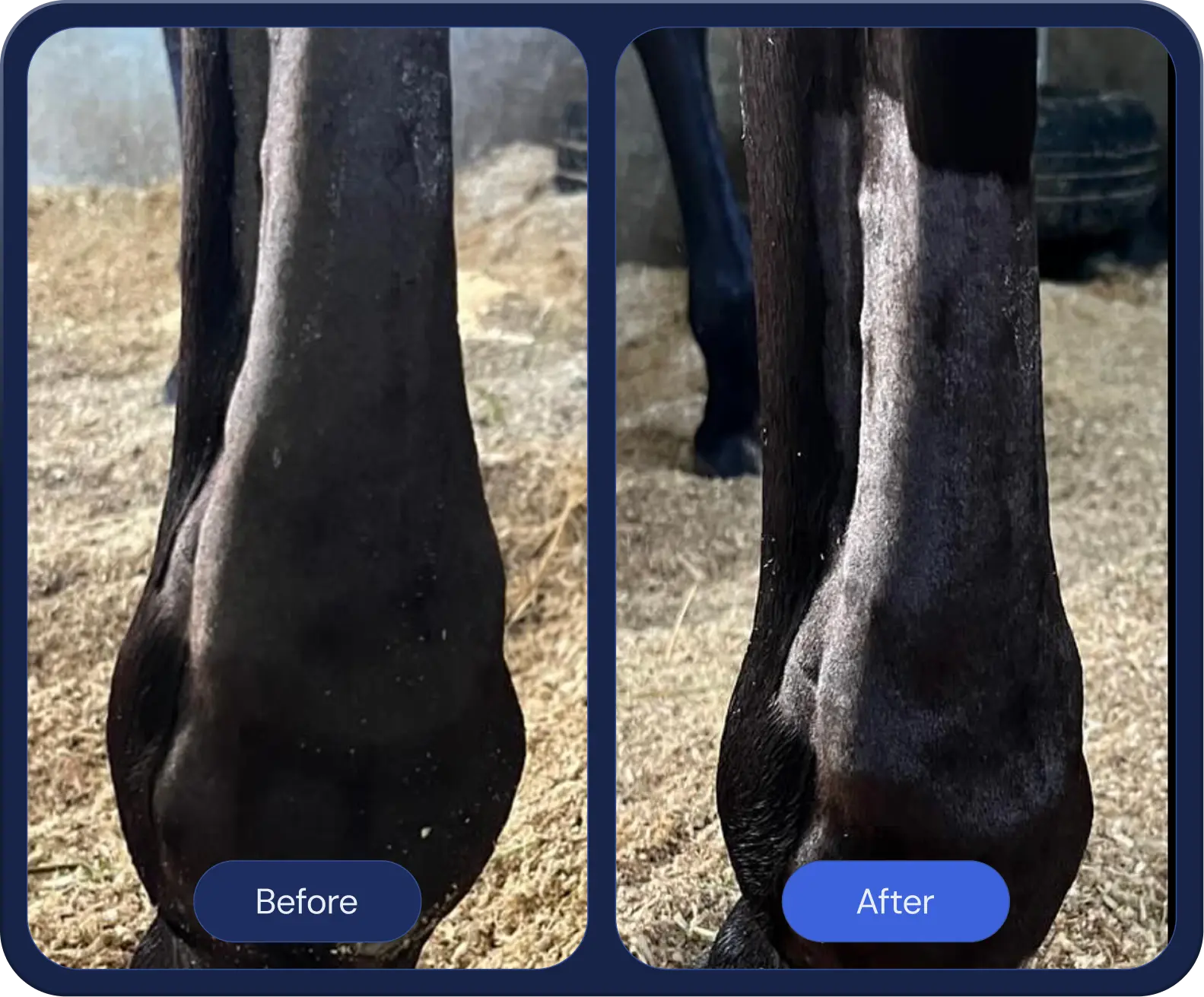
Cryotherapy in action
Focused care for specific areas.
Cryotherapy can be directed to specific joints, limbs, feet, and larger muscle groups based on each horse’s needs.
Equine pricing · Signature recovery packages
More complete support, bundled simply.
Choose focused coverage for everyday recovery, the full lower limb, or a complete horse recovery session.
01Performance Recovery
Choose any 3–4 targeted areas · minimum booking
$10002Full Lower Limb Recovery
All 4 legs (tendons, fetlocks & pasterns) + knees or hocks (Save $55)
$16503Complete Horse Recovery
All 4 legs (tendons, fetlocks, pasterns, stifles, knees & hocks) + neck + back + SI (Save $195)
$225 ❄Don’t see a package that fits? Let me create a custom recovery package for your horse.
Multi-day show savings
Complete recovery at a show-only rate.
Each show package is for one horse and includes Complete Horse Recovery: all four legs, neck, back, and SI.
Single sessionComplete Horse Recovery
$1253 sessions$100 per sessionGreat for 3-day shows
$3004 sessions$93.75 per session
$3755 sessions$85 per sessionGreat for week-long or longer shows
$425Group show rate: Schedule 10 or more horses at the same show and receive an additional 5% off the combined package total.
Customize a recovery package
Add focused coverage where your horse needs it.
Individual areas are available as add-ons to a recovery package, not as standalone appointments.
01
Leg & hoof add-ons
Add to any recovery packageTendonsfront or hind pair / all four
+$45 / +$75Hoovespair / all four
+$35 / +$60Fetlockspair / all four
+$30 / +$50Pasternspair / all four
+$30 / +$5002
Back & body add-ons
Add to any recovery packageMid backtargeted area
+$35Important session requirements*At a show, a horse’s cryotherapy session should be completed at least 3 hours prior to the class to allow the body enough time to return to homeostasis.
*Specific areas receiving cryotherapy MUST be completely dry before the session.
Human pricing
Targeted recovery for people.
Choose a specific area, a bundled recovery package, or a multi-session package.
01
Back & neck
Add to any recovery packageUpper backtargeted area
$40Lower backtargeted area
$4002
Arms
Add to any recovery packageShoulderone side / both sides
$35 / $60Upper arm - bicep/tricepone side / both sides
$35 / $60Elbowone side / both sides
$30 / $50Lower arm - forearmone side / both sides
$35 / $60Wristone side / both sides
$30 / $50Handone side / both sides
$30 / $5003
Legs
Add to any recovery packageUpper leg - thighone side / both sides
$40 / $70Kneeone side / both sides
$35 / $60Lower leg - calf/shinone side / both sides
$40 / $70Ankleone side / both sides
$30 / $50Footone side / both sides
$30 / $50Back Recovery
Upper, mid and lower back
Upper-Body Recovery
Neck, shoulders and upper back
Arm Recovery
Shoulder through hand - one arm
Leg Recovery
Thigh through foot - one leg
Lower-Body Recovery
Thighs, knees and lower legs
Full Recovery
Choose up to 6 targeted areas
Multi-session packages
Build consistency into recovery.
3 targeted sessions$105
5 targeted sessions$165
10 targeted sessions$300
❄Canine & livestock pricing
Pricing varies by client.
Canine and livestock sessions are quoted based on the animal, specific area, and individual session needs. Contact Molly for pricing before booking.
Important session requirements*Specific areas must be completely clean and dry before the session.
*Pricing covers targeted cryotherapy only. Services support recovery and wellness and are not a substitute for medical diagnosis or care.